
What does a dispute transaction mean for merchants?
A dispute transaction is when a cardholder asks their bank to reverse a payment they do not recognise or do not agree with. Banks call this a dispute; once the issuer files it with the card network it becomes a chargeback. Merchants cut disputes with clear descriptors, easy refunds, risk scoring before capture, and solid evidence for cases that arrive.
Updated · RiskCogs team
Key facts
- A dispute starts with the cardholder and their issuing bank; a chargeback is the network filing that follows.
- Common reasons: fraud (card not present), goods not received, not as described, cancelled subscription, and unrecognised billing.
- Every chargeback usually carries a fee and counts toward card-network monitoring ratios.
- Many disputes are avoidable with recognisable descriptors, clear cancellation and fast refunds.
Dispute transaction vs chargeback vs refund
People use these words loosely. A refund is a return you choose to give. A dispute is the cardholder asking their bank to reverse a payment. A chargeback is the formal network case the issuer opens after that request, which usually debits your acquirer and adds a fee.
Your payment provider dashboard may show the word dispute for the whole process. Card networks still use reason codes and chargeback workflows underneath.
Why cardholders dispute transactions
Most disputes fall into a few buckets. Labelling them by reason code tells you whether to fix fraud controls, fulfilment, or billing clarity.
- Fraud, card not present: the cardholder says they did not make the payment.
- Unrecognised charge: a real purchase with a confusing descriptor or missing receipt.
- Goods or services not received, or not as described.
- Cancelled recurring payment that still billed.
- Duplicate or incorrect amount.
What happens after a dispute is filed
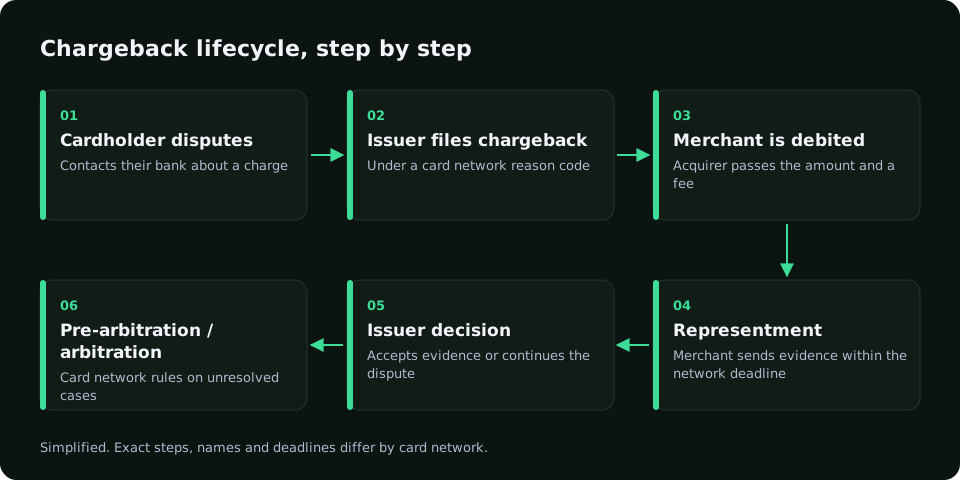
- The cardholder contacts the issuer and opens a dispute.
- The issuer reviews and may file a chargeback under a reason code.
- Your acquirer or payment provider notifies you and often debits the amount plus a fee.
- You can accept the loss or submit representment evidence within the network deadline.
- The issuer decides, or the case can move to pre-arbitration or arbitration under network rules.
How merchants can reduce dispute transactions
Prevention beats representment. Focus on the causes you control before the bank is involved.
- Score payments before capture and step up or decline the riskiest ones.
- Use a billing descriptor customers recognise and put a support contact on receipts.
- Make cancellation and refunds easy; a refund is cheaper than a chargeback.
- Keep delivery, login and usage evidence for every order.
- Feed every chargeback outcome back into your fraud rules.
Evidence that helps in representment
Strong evidence matches the reason code. Fraud cases need proof of authentication or risk checks; service cases need delivery, usage or cancellation logs. Incomplete packs rarely win, so build evidence collection into checkout and fulfilment from day one.
Can I dispute a charge on my debit card?
Yes. Debit card payments that run on Visa or Mastercard can be disputed through the same network process as credit cards: the cardholder contacts the issuing bank, which can file a chargeback with a reason code.
Timing and consumer protection differ. In the United States, Regulation E sets separate rules for unauthorised electronic transfers, and liability can depend on how quickly the cardholder reports. For merchants, a debit dispute looks like any other chargeback and needs the same evidence.
Dispute types and first response
| Type | Typical cause | First response |
|---|---|---|
| Fraud CNP | Stolen card details | Risk score history, 3-D Secure, device and IP evidence |
| Unrecognised | Confusing descriptor | Descriptor change, receipts, customer contact |
| Not received | Delivery failure or false claim | Tracking, delivery confirmation, usage logs |
| Subscription | Hard cancel or surprise renewal | Cancellation proof, renewal notices |
| Not as described | Listing mismatch | Product page snapshot, support thread |
How RiskCogs helps with transaction disputes
RiskCogs scores each payment before you capture it and returns readable reason codes, including chargeback and refund history linked to the same email, phone or card BIN. When a dispute arrives, you can send the outcome back through the feedback API with the riskId so similar payments score higher next time.
RiskCogs does not file disputes or handle representment. It is a risk scoring layer next to your payment provider and does not process payments. See the pricing page for current plans.
See what you would have blocked — free shadow modeFrequently asked questions
What does dispute transaction mean on a bank statement?
It means the cardholder asked their bank to investigate or reverse a payment. The bank may show dispute while it reviews the case. If the issuer files with the card network, it becomes a chargeback that can debit the merchant and add a fee. Merchants usually hear about it through their payment provider.
Is a dispute the same as a chargeback?
A dispute is the cardholder request to the issuer. A chargeback is the formal network case that often follows. Refunds are different: you return funds by choice. Providers may use dispute as a catch-all label in dashboards, so check the reason code and status for the exact stage.
How long does a transaction dispute take?
Timelines differ by card network and reason code. Merchants usually have a limited window to submit representment evidence after notification. Check your acquirer or payment provider deadlines for each case. Acting early and matching evidence to the reason code matters more than volume of documents.
Can I stop a customer from disputing a transaction?
You cannot block a cardholder from contacting their bank. You can reduce how often it happens with clear descriptors, easy refunds, accurate listings and stronger fraud checks before capture. When a dispute still arrives, good evidence and fast responses improve your chances in representment.
Can I dispute a charge on my debit card?
Yes. Visa and Mastercard debit payments can be disputed with your bank much like credit card charges, and the bank may file a chargeback. Consumer rules can differ, for example Regulation E in the United States, so report unauthorised use quickly.
Sources and related reading
- Visa, Visa Core Rules and Visa Product and Service Rules (public edition), dispute resolution chapter.
- Mastercard, Chargeback Guide (public edition).