
Direct debit return: how SEPA returns hit merchants
A direct debit return is when a bank reverses a collected direct debit, for example after a SEPA Lastschrift debit. Unlike a card chargeback, the scheme rules and timelines differ, and many returns come from insufficient funds or revoked mandates. Merchants cut losses with clear mandates, pre-notifications and risk checks before collection.
Updated · RiskCogs team
Key facts
- SEPA Core and SEPA B2B direct debit have different return rights and windows.
- Common return reasons include insufficient funds, no mandate, revoked mandate and account closed.
- A return is not the same process as a card-network chargeback, though both reverse a collection.
- Mandate quality and pre-notification reduce avoidable returns more than fighting them after the fact.
Direct debit return vs card chargeback
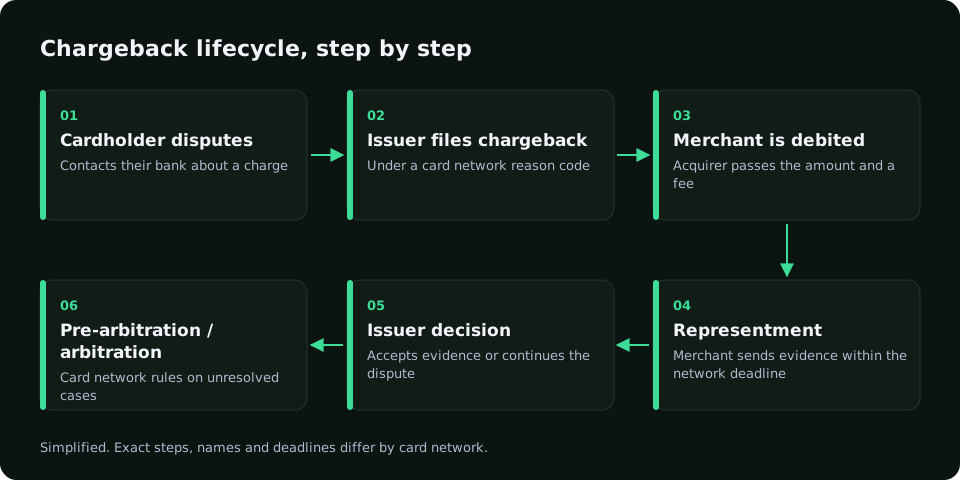
Card chargebacks follow Visa or Mastercard dispute rules after a card payment. A direct debit return follows the SEPA (or local) direct debit scheme when the debtor bank rejects or reverses a collection. Deadlines, evidence and fees differ, so treat them as separate operational tracks.
In Germany merchants often search for Rücklastschrift when a Lastschrift comes back. That search intent is about direct debit returns, not card chargebacks, even if finance teams discuss both under “reversals”.
Typical return reasons
- Insufficient funds on the debtor account.
- No valid mandate or mandate data mismatch.
- Mandate revoked by the debtor before collection.
- Account closed or blocked.
- Debtor disputes the debit within the scheme window.
How merchants reduce returns
- Collect and store a clear mandate with the right scheme (Core or B2B).
- Send pre-notification with amount and date before collection.
- Retry soft returns on a controlled schedule; do not hammer the same account.
- Stop collections quickly after revoke or chargeback-like disputes.
- Score first-time and high-value collections when fraud or mule patterns appear.
Where payment fraud risk still matters
Stolen account details and mule accounts can show up as successful first collections that later return or trigger AML reviews. Device, identity and velocity checks before the first debit help, especially for new customers and account changes.
How RiskCogs helps around direct debit
RiskCogs scores checkout and account events with device and behaviour signals before money moves. For mixed card and direct-debit merchants, the same risk layer flags mule-like signups and reused devices even when the collection method is Lastschrift.
RiskCogs does not run SEPA collections or file returns. It is a risk scoring layer next to your payment provider. See /pricing/ for plans.
See what you would have blocked — free shadow modeFrequently asked questions
What is a direct debit return?
It is a reversal of a collected direct debit by the debtor bank under scheme rules. The merchant usually loses the amount and may pay a return fee. Reasons range from insufficient funds to a revoked mandate or a debtor dispute inside the allowed window.
Is a Rücklastschrift the same as a chargeback?
Not exactly. Rücklastschrift usually means a returned SEPA Lastschrift. A chargeback is the card-network dispute process after a card payment. Both reverse money, but rules, codes and timelines differ, so playbooks should stay separate.
How long can a customer reverse a SEPA Core debit?
SEPA Core gives consumers an eight-week no-questions refund right for authorised collections, and longer windows for unauthorised ones under scheme rules. B2B mandates have much tighter debtor rights. Confirm current scheme guides with your bank.
How do I cut avoidable returns?
Improve mandate capture, send accurate pre-notifications, validate IBANs where your provider allows, and stop retries after revoke. For fraud-like patterns on new accounts, add device and velocity checks before the first collection.
Sources and related reading
- European Payments Council, SEPA Direct Debit Core and B2B Rulebooks (public editions).
- Deutsche Bundesbank and EPC public materials on SEPA direct debit returns.