
Return item chargeback: why a deposit comes back and what to do
A return item chargeback is a bank entry that reverses a deposit you made when the deposited item, usually a cheque, is returned unpaid. It often appears as DEP RETURN or RETURN ITEM CHARGEBACK and may come with a bank fee. It is not a card chargeback filed by a cardholder, although both pull money back from your account.
Updated · RiskCogs team
Key facts
- The reversal follows a deposited item, often a cheque, that the paying bank returned.
- Common causes are insufficient funds, a closed account, a stop payment or a signature problem.
- Banks may add a returned-deposit fee; check your account terms.
- A card chargeback is a different process started by a cardholder through the card networks.
What a return item chargeback means
When you deposit a cheque, your bank credits your account before it has collected the money from the payer's bank. If the payer's bank refuses the item, your bank reverses the credit. That reversal is the return item chargeback.
Statement labels vary by bank. You may see DEP RETURN, RETURN ITEM CHARGEBACK, RETURNED DEPOSIT ITEM or similar wording.
Common reasons items are returned
- Insufficient funds in the payer's account.
- The payer's account is closed or frozen.
- The payer placed a stop payment.
- Missing or mismatched signature or endorsement.
- Suspected counterfeit or altered cheque.
Return item chargeback vs card chargeback
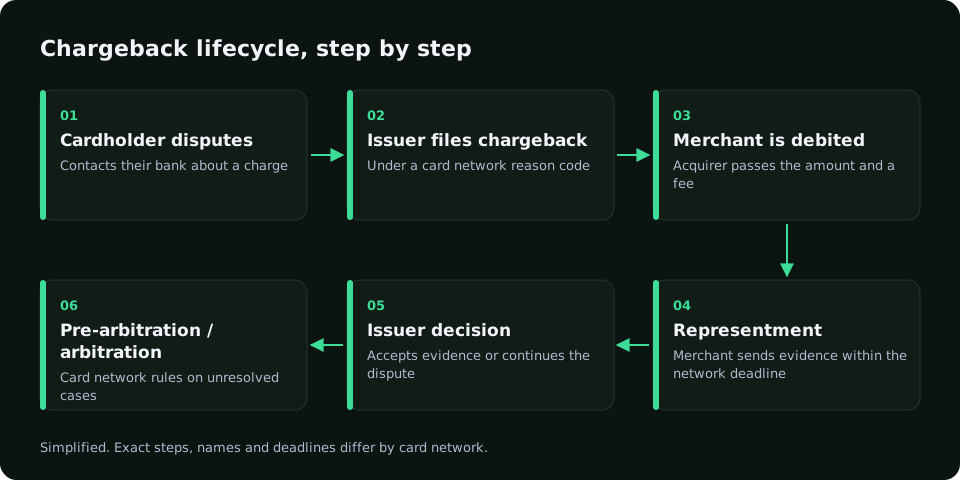
A return item chargeback is about a deposit that failed to clear. A card chargeback is a dispute a cardholder opens with their card issuer, handled under Visa, Mastercard or other network rules with reason codes and representment.
Both pull money back, but the evidence, deadlines and fixes differ. Card chargebacks are fought with order and delivery evidence; returned items are usually settled directly with the payer.
What to do after one
- Read the return reason your bank gives.
- Contact the payer and ask for a new payment by a cleared method.
- Check whether your bank allows re-presenting the cheque.
- Review the fee and dispute it with your bank if it looks wrong.
- For repeat payers, move to verified or instant payment methods.
Return item chargeback compared with a card chargeback
| Return item chargeback | Card chargeback | |
|---|---|---|
| Started by | Payer's bank returning a deposited item | Cardholder disputing with their issuer |
| Typical item | Cheque or other deposited item | Card payment |
| Rules | Bank and clearing rules | Card network dispute rules |
| How to respond | Collect payment again from the payer | Representment with evidence |
Where RiskCogs helps
RiskCogs works on card and online payment risk, not cheque clearing. If you also take card payments, it scores each one before approval so fewer fraud orders become card chargebacks later.
For businesses that see both, keeping returned-deposit history next to card risk signals helps spot payers who repeatedly fail to pay. RiskCogs is a risk scoring layer next to your payment provider. It does not process payments and does not file or fight disputes for you. See the pricing page for plans.
See what you would have blocked — free shadow modeFrequently asked questions
What does return item chargeback mean on my bank statement?
It means a deposit you made was reversed because the deposited item, usually a cheque, was returned unpaid by the payer's bank. Your bank removes the credit it gave you and may charge a fee under your account terms.
What is a DEP return chargeback?
DEP RETURN is a common statement label for the same event: a deposited item came back unpaid and the bank reversed the deposit. The wording differs by bank, so check the entry detail or ask your bank which deposit was returned and why.
Is a return item chargeback the same as a credit card chargeback?
No. A return item chargeback reverses a failed deposit, often a cheque. A credit card chargeback is a dispute a cardholder files with their issuer under card network rules. The causes, deadlines and ways to respond are different.
How can a business avoid return item chargebacks?
Wait for funds to clear before releasing goods on large cheque payments, verify new payers, and offer cleared or instant payment methods. For repeat problems, ask the bank about verification services and stop accepting cheques from payers with returned items.
Sources and related reading
- Bank account agreements and fee schedules for returned deposited items (check your own bank's terms).