
Chargeback prevention alerts: stop disputes before they become chargebacks
Chargeback prevention alerts notify a merchant when a cardholder disputes a payment with their issuer, before it becomes a formal chargeback. The merchant can refund or resolve the order inside a short window. The main networks are Ethoca, owned by Mastercard, and Verifi from Visa, which offers Order Insight and Rapid Dispute Resolution (RDR).
Updated · RiskCogs team
Key facts
- Alerts sit between the cardholder complaint and the formal chargeback.
- Ethoca is part of Mastercard; Verifi is part of Visa.
- RDR can resolve eligible Visa disputes automatically using rules the merchant sets.
- Coverage depends on which issuers take part, so alerts do not catch every dispute.
How chargeback prevention alerts work
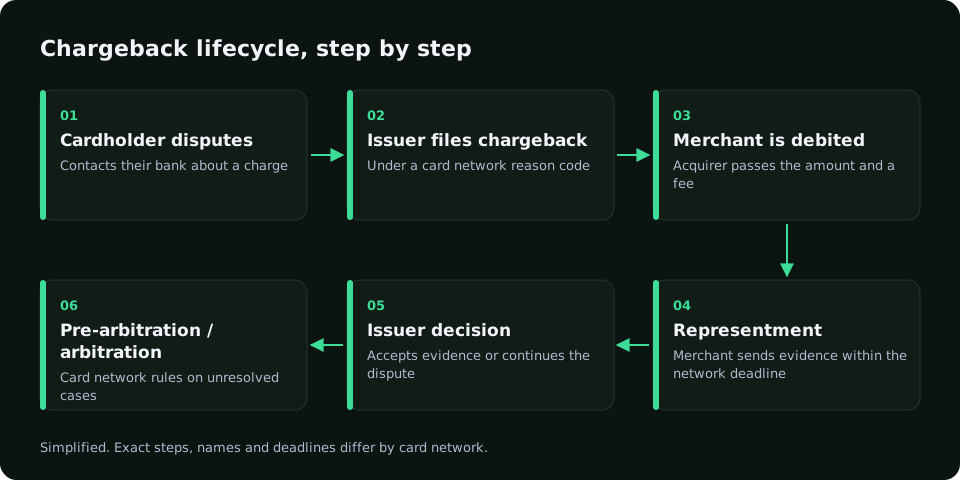
- A cardholder contacts their issuer about a charge.
- A participating issuer shares the dispute through an alert network.
- The merchant or its provider receives the alert with order details.
- The merchant refunds, cancels or shares order details inside the response window.
- The issuer can then close the case instead of filing a chargeback.
Ethoca alerts
Ethoca, part of Mastercard, shares fraud and dispute alerts from participating issuers. Merchants usually respond by refunding the transaction and stopping shipment if the order is still open.
Ethoca also offers Consumer Clarity, which shows order details to the cardholder in their banking app to answer 'I don't recognise this charge' questions.
Verifi Order Insight and RDR
Verifi is part of Visa. Order Insight shares purchase details with the issuer while the cardholder is on the phone or in the app, which can stop confusion disputes.
Rapid Dispute Resolution (RDR) lets merchants set rules so that eligible Visa disputes are refunded automatically before they become chargebacks. Design the rules carefully, because automatic refunds also cost revenue.
When alerts are worth it
- Many disputes are 'not recognised' or friendly fraud on low-to-mid order values.
- You need to keep your dispute ratio inside card network monitoring thresholds.
- Your operations can act on alerts within the response window.
- You track alert cost against the chargebacks and fees you avoid.
Prevention score vs early-warning feed
Network notices react after authorisation when an issuer surfaces risk. A scoring layer reacts earlier on the checkout or account event you send. Running both is normal: score to cut avoidable disputes, then rely on notices for residual cases before fulfilment leaves the warehouse.
RiskCogs does not replace those notice vendors. It returns reasons you can store next to the order so support and risk share one evidence trail. See also the chargeback management software comparison on this site.
Alert options at a glance (descriptive, not a ranking)
| Option | Network | What it does |
|---|---|---|
| Ethoca alerts | Mastercard | Shares issuer dispute and fraud alerts so the merchant can refund early |
| Consumer Clarity | Mastercard | Shows order details to the cardholder in the issuer app |
| Order Insight | Visa (Verifi) | Shares purchase details with the issuer during the inquiry |
| Rapid Dispute Resolution | Visa (Verifi) | Applies merchant rules to refund eligible disputes automatically |
How RiskCogs works with alerts
Alerts act after a payment; RiskCogs acts before it. A risk score with reasons at checkout stops many fraud orders that would later trigger alerts or chargebacks.
Alert and dispute outcomes can feed back into RiskCogs rules, for example raising the score for linked accounts that keep disputing. RiskCogs is a risk scoring layer next to your payment provider. It does not process payments and does not file or fight disputes for you. See the pricing page for plans.
See what you would have blocked — free shadow modeFrequently asked questions
What are chargeback prevention alerts?
They are notifications from alert networks that a cardholder has disputed a payment with a participating issuer. The merchant can refund or resolve the order within a short window, so the issuer can close the case before it becomes a formal chargeback.
What is the difference between Ethoca and Verifi?
Ethoca is part of Mastercard and shares dispute and fraud alerts from participating issuers. Verifi is part of Visa and offers Order Insight, which shares purchase details, and Rapid Dispute Resolution, which refunds eligible disputes automatically using merchant rules.
What is RDR in chargebacks?
RDR means Rapid Dispute Resolution, a Verifi service for Visa transactions. The merchant sets rules, for example by amount or reason, and eligible disputes are resolved with an automatic refund before they become chargebacks. It works only for issuers and cases that the programme covers.
Do alerts stop all chargebacks?
No. Only participating issuers send alerts, response windows are short, and some cases still move to chargeback. Alerts work best next to prevention at checkout and a representment process for the disputes that remain.
Sources and related reading
- Mastercard, Ethoca product information (public pages), named as a text source only.
- Visa, Verifi Order Insight and Rapid Dispute Resolution product information (public pages), named as a text source only.
- Visa, Visa Core Rules and Visa Product and Service Rules (public edition), dispute resolution chapter.